



Creator
Paweł Twardziak
Official LangChain Expert and LangChain Certified Agent Engineer. Contributor to the LangChain repositories. A practitioner of agentic engineering - creator of Ai Board Games. Teaches what actually holds up in production.

Master agentic engineering and harness the power of AI
From hand-written rules, through learning models, to agentic applications that assemble their interface before your eyes. Learn to build Software 3.0 - production-grade, not playground demos.

Each era changes how we build software - and how we think about it.
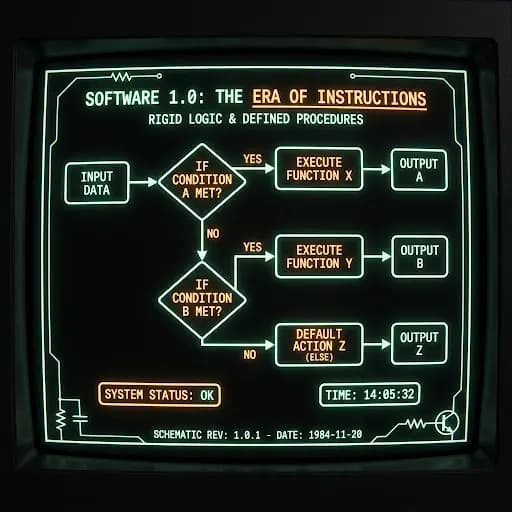
A program is instructions. Every step written out explicitly by a human, in blocks and arrows.

Instead of rules - a network of nodes learning patterns from data. Behavior emerges from training.
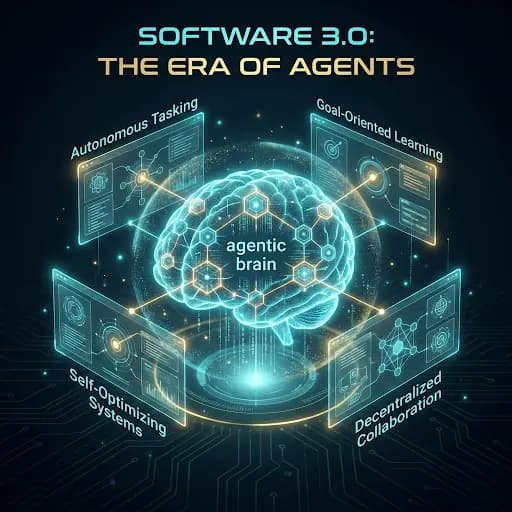
A goal expressed in natural language. The agent plans, picks tools and assembles the interface on the fly.

Programs used to be instructions, then trained models. Today they are increasingly goals expressed in natural language.
Software that plans, picks tools and acts - rather than merely answering a query.
Engineering shifts from writing every step to designing behavior, constraints and trust.
Seven parts that together make software able to think, act - and run in production you can trust.
Plans and decides - chooses what to do next.
Act on the world: APIs, code, actions.
Maintains context across steps and sessions.
Talks to the user in their language.
Traces every run so the whole system stays trustworthy and debuggable.
Tested like a product: eval suites and regression checks on real traces catch quality drops before users do.
Tokens, latency and spend are measured per run, so behavior stays within budget as the agent scales.

Agentic applications open a new attack surface - prompt injection, data leaks, an agent acting outside its scope. That's why Devs 3.0 is teaming up with Vigil Guard, an AI Detection & Response (AIDR) platform, to teach you how to build agents you can trust.
Prompt injection (direct and indirect) and out-of-scope attempts, caught before they reach the model.
Detection and masking of sensitive data (PII). Control over what the agent sees and shares.
In a dedicated section you wire Vigil Guard into your own agent and see AIDR at work: from integration to monitoring.

Interfaces stop being rigid screens. The agent assembles the right interface for the moment - in response to what the user has in mind.
This is one of the skills our courses teach: designing software that understands intent and responds to it with a whole interface, not a single window.
We believe the next applications will not be written line by line, but designed as behavior. Our mission is to educate creators who do this consciously - with craft and responsibility.
Formulates the goal in natural language and delegates execution - instead of hand-coding every step.
Sets the system's boundaries, oversight, observability and evaluation, not just the happy path of a single function.
Composes software that plans, decides and acts - from memory, tools and a reasoning core.
Knows the UI is assembled on demand for the user's intent, not a rigid, pre-designed screen.
Builds in guardrails and data protection from the start - validates inputs and outputs, scopes access to information and keeps the agent operating within set boundaries.


Over a decade of programming experience, and soon after ChatGPT arrived I started exploring the technical side of this field - I share solutions that genuinely work and are ready for production.
Official LangChain Expert and LangChain Certified Agent Engineer. Contributor to the LangChain repositories. A practitioner of agentic engineering - creator of Ai Board Games. Teaches what actually holds up in production.
Each course is a separate world, built as a modern agentic application that uses gamification elements. See the experience for yourself.
Production-grade, not playground - courses teach you to build solutions for real users: testable, observable, secure and scalable.
Build your own agentic application with generative UI - one that thinks, acts and talks, and assembles its own interface around the user's intent. You learn by building: step by step you create an agentic application with generative UI and unlock new capabilities you'll carry not only into your own projects, but also into the competencies you need at the company where you work.
In the stack
Schedule
Starts: January 11, 2027
Course language


Self-paced AI courses. Each one builds a concrete skill and ends with a verifiable certificate.
Explore Skills 3.0
Free coding challenges. You build a repo and the Devs 3.0 agentic reviewer grades it against a hidden rubric and awards a badge.
Explore Challenges 3.0
We build small, sharp tools that improve your agentic workflow. All free and ready to use right away.
See the free toolsWe design and ship AI solutions - from automating everyday processes to a production agent that genuinely takes work off your teams. The LangChain ecosystem is the backbone of our implementations.
Explore implementation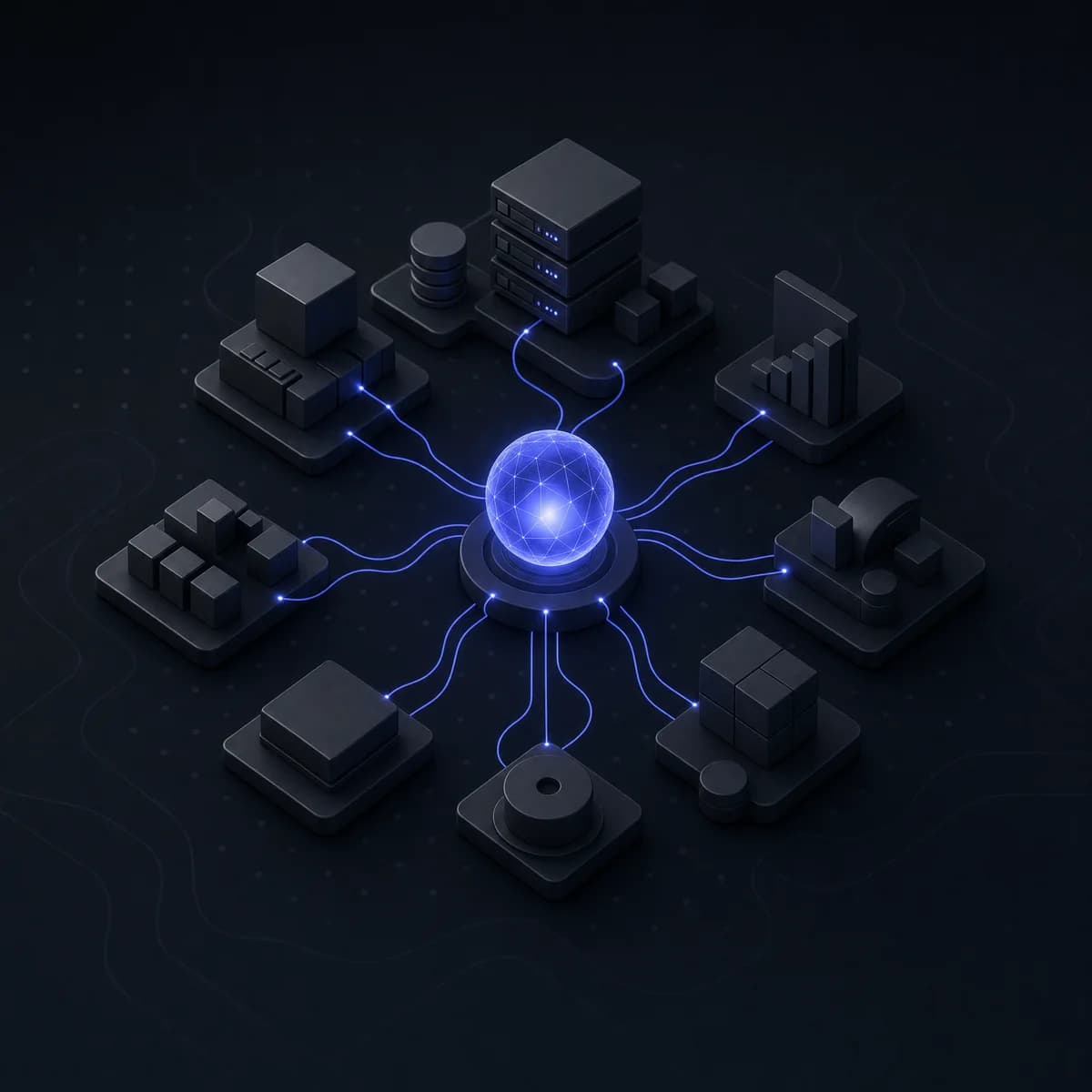

Hands-on training and workshops on using AI in the company - for technical and non-technical teams, from everyday work with AI to building agents on the LangChain ecosystem.
Explore training
Webinars, workshops, meetups and other events on building agentic solutions. Check the Devs 3.0 events calendar.
See all events
Builders who think in intent, not syntax. Share what you ship, ask what you don't know - and shape what Software 3.0 is. The Devs 3.0 Community forum is open to everyone at devs30.com/community.
Each course has its own dedicated community - you learn alongside developers working through the exact same material.
Ask questions, share your implementation, get feedback from course creators and fellow builders.
Share what you build during the course, celebrate milestones and stay motivated all the way to the end.